
BACKYARD HOMESTEAD ✦ FARM LIFE
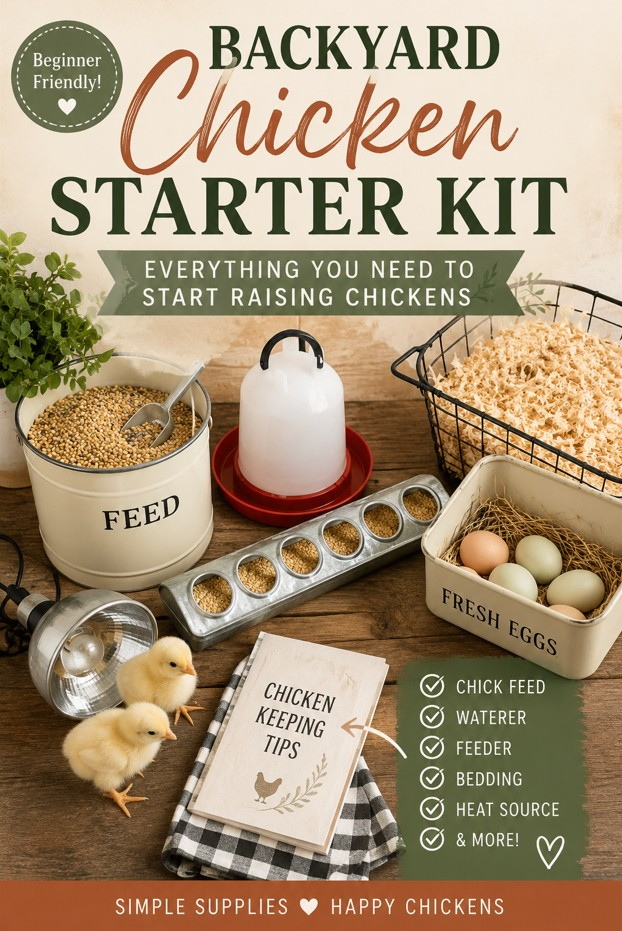
10 Things to Buy Before You Get
Backyard Chickens
So you’re not scrambling on day one — trust me, you want this list before the chicks arrive.
We’ve been talking about putting together a backyard chickens starter kit on our farm for a while now. We have the land. We have the dogs. We have the goats. Chickens feel like the next logical chapter — and I have a feeling we’re getting close to pulling the trigger this spring.
So I did what any planner-at-heart would do: I went deep on research before a single chick set foot on our property. And what I found surprised me. Everyone talks about the coop. Almost nobody talks about the ten other things you need to have ready before day one.
If you’re in the same boat — dreaming about fresh eggs but not quite there yet — this list is for you. These are the supplies I’d order today if we were getting chicks this week.
Baby chicks can’t go straight into an outdoor coop — they need a warm, safe indoor space for the first 4–6 weeks of their lives. This is called a brooder, and getting it right is the single most important thing you can do before your chicks arrive.
🐣 All-in-One Chick Starter Kit (Brooder Box + Heater + Feeder + Waterer)
1Search: “QVVCOOP brooder box all-in-one chick starter kit”
After researching this extensively, I landed on an all-in-one brooder kit rather than buying everything separately — and I think it’s the smarter move for first-timers. This QVVCOOP hexagon-style brooder includes a built-in heating plate, feeder, waterer, and perch all in one package, holds up to 30 chicks, and comes with a remote control for the heater. The built-in heating plate eliminates the fire risk of a heat lamp, the stainless steel frame is durable, and getting everything in one box means nothing is missing on arrival day. Sold separately, these components cost more and require more setup decisions. The all-in-one is exactly right for a beginner who wants to just get it working.
📦 What’s Included in This Kit
- Hexagon brooder playpen with stainless steel frame
- Built-in heating plate with remote temperature control
- Chick feeder
- Chick waterer
- Perch for as chicks grow
- Holds up to 30 chicks
🌾 Kiln-Dried Pine Shavings for Bedding
2Search: “pine shavings small animal bedding kiln dried”
Kiln-dried pine shavings are the standard brooder bedding — absorbent, odor-controlling, and easy to replace. Avoid cedar (the oils irritate chicks’ respiratory systems) and avoid hay or straw in the brooder (molds quickly when wet). Buy a compressed bale — it expands significantly and lasts a while.
The all-in-one kit covers the feeder and waterer hardware for the brooder. These are the consumables you’ll need to fill them with — and the items you’ll keep buying as long as you have chickens.
🐥 Chick Starter Feed (Medicated)
3Search: “chick starter grower crumbles medicated”
Baby chicks need a high-protein starter feed for the first 18 weeks — not layer pellets, not scratch. Chick starter crumbles contain 18–20% protein to support rapid growth and immune development. Medicated feed contains Amprolium, which helps prevent coccidiosis. If your chicks were vaccinated at the hatchery, skip the medicated version — ask when you buy your chicks.
🐔 A Hanging Feeder for the Coop
4Search: “hanging poultry feeder metal gravity”
The all-in-one brooder kit covers feeding while your chicks are young indoors. Once they graduate to the coop, you’ll need a proper hanging feeder. Hanging keeps feed off the ground, dramatically reducing waste and contamination. Set it at approximately back height for the birds. Metal outlasts plastic significantly — look for one that holds at least 7–10 pounds so you’re not refilling it daily.
These are the items experienced chicken keepers wish someone had told them about upfront — the stuff that feels optional until you need it urgently at 10pm on a Tuesday.
⚡ Chick Electrolytes & Probiotics
5Search: “Sav-A-Chick electrolyte supplement chick”
Chicks go through a stressful journey to get to you — hatched, sorted, boxed, shipped. Adding electrolytes to their water for the first few days helps them recover faster and get off to a stronger start. Sav-A-Chick is the go-to brand in every chicken-keeping community — small packets you mix into a gallon of water. Probiotics support healthy gut development and help with occasional runny droppings that panic new chick owners.
🦴 Chick Grit
6Search: “chick grit poultry grit small”
Chickens don’t have teeth — they swallow small particles to grind food in their gizzard. Chicks eating only processed starter crumbles don’t need grit yet, but the moment you introduce any treats or they go outside, grit becomes essential. Offer it free-choice in a small separate dish — don’t mix it into their feed. They’ll self-regulate.
🐚 Crushed Oyster Shell
7Search: “crushed oyster shell chickens calcium”
Oyster shell is a calcium supplement for laying hens only — not for chicks, not for roosters. Once your hens start laying, calcium is critical for strong eggshells. Without it, hens pull calcium from their own bones, which leads to serious health problems over time. Keep it in its own small dish separate from the feed so hens can self-regulate.
🩹 Vetericyn Poultry Wound Spray
8Search: “Vetericyn poultry wound spray antimicrobial”
Having first aid supplies before you need them is the difference between a calm fix at home and a panicked midnight drive to the farm store. Vetericyn cleans wounds without stinging and its antimicrobial formula prevents infection without requiring a vet visit for minor injuries. Essential for pecking wounds, cuts from hardware cloth, or any scrape that breaks skin.
💜 Blu-Kote Antiseptic Spray
9Search: “Blu-Kote antiseptic wound spray poultry”
Blu-Kote turns wounds blue — which sounds odd until you understand why. Chickens are attracted to the color red and will relentlessly peck at wounds on other birds. The blue dye disguises the wound so flock-mates leave it alone while it heals. Use it alongside Vetericyn: clean with Vetericyn first, then cover with Blu-Kote.
🧺 A Wire Egg Basket (The Whole Point)
10Search: “Little Giant wire egg basket”
This one is partly practical and partly the item that makes the whole chicken dream feel real. You need something to collect eggs in, and your pockets don’t count. (Apparently this is a lesson everyone learns the hard way.) A wire egg basket lets air circulate, eggs don’t crack against each other, and it’s easy to rinse. The Little Giant basket holds about a dozen eggs, has a comfortable handle, and costs less than $15. You’ll use it every single morning.
🏠 A Quick Note on the Coop
I’m not covering coop builds in this post — that deserves its own deep dive. But one rule worth knowing now: whatever size the manufacturer says the coop holds, cut that number in half. Plan for 4 square feet per bird inside, and 10 square feet per bird in the run. And always use 1/2-inch hardware cloth, not chicken wire — raccoons can rip through chicken wire like tissue paper.
💬 Are you thinking about getting chickens too?
We’re still in the planning stage over here — but I’d love to know where you are in your chicken journey. Have you had backyard chickens before? Is something specific holding you back? Drop it in the comments. 🐔
The coop gets all the Pinterest attention — and it deserves it. But the stuff on this list is what keeps your chicks alive and thriving in those first critical weeks before they even make it to the coop.
We’re not there yet on our farm, but this list is saved, the research is done, and whenever that day comes — we’ll be ready. 🐣
— Caryn