SMALL HOMESTEAD LIFE ✦ DOGS ✦ GARDEN
What to Grow in Your Garden for Your Dogs
The vegetables, fruits, and herbs your pups will actually eat straight from the vine — and a few they absolutely cannot have.
I used to garden just for myself. Then Ollie discovered the carrot patch.
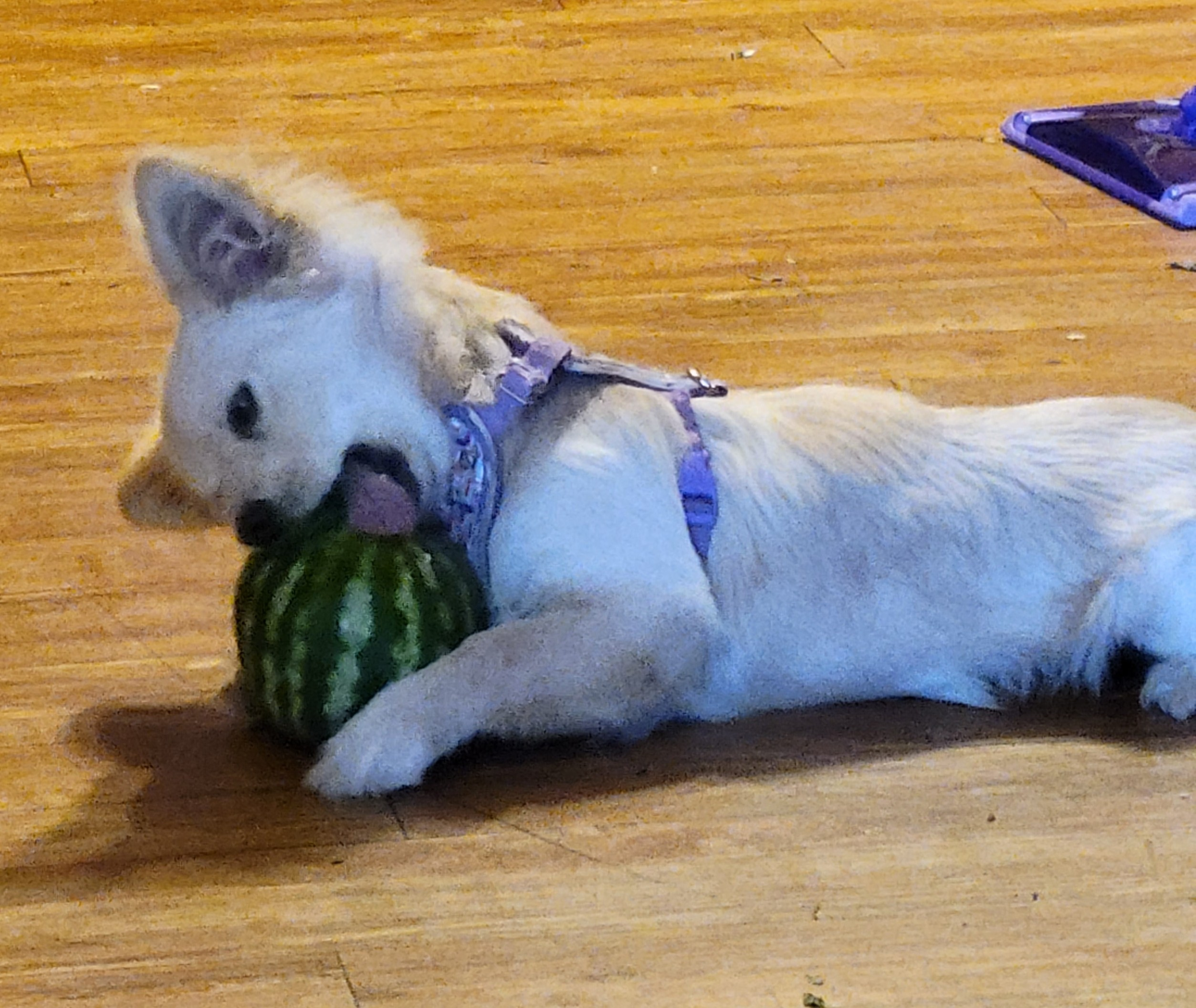
Now I know exactly which vegetables to grow for dogs — and which ones to protect with my life. Boomer and Ollie have strong opinions about what goes in the ground every spring, mostly because they’ve figured out that a garden means fresh snacks. For example, Ollie will eat watermelon straight off the vine. The entire indoor spinach section disappeared one winter — with help from the cat, as it turns out. As for Boomer, he and Ollie will absolutely fight my grandson over carrots and sweet potatoes pulled fresh from the dirt — and honestly, watching a toddler and two small dogs negotiate over a carrot is one of my favorite things that has ever happened on this small homestead.
After a few years of trial and error — and figuring out which plants survive having a Dameranian treat the garden like his personal buffet — here’s what I actually grow with the dogs in mind, and why.
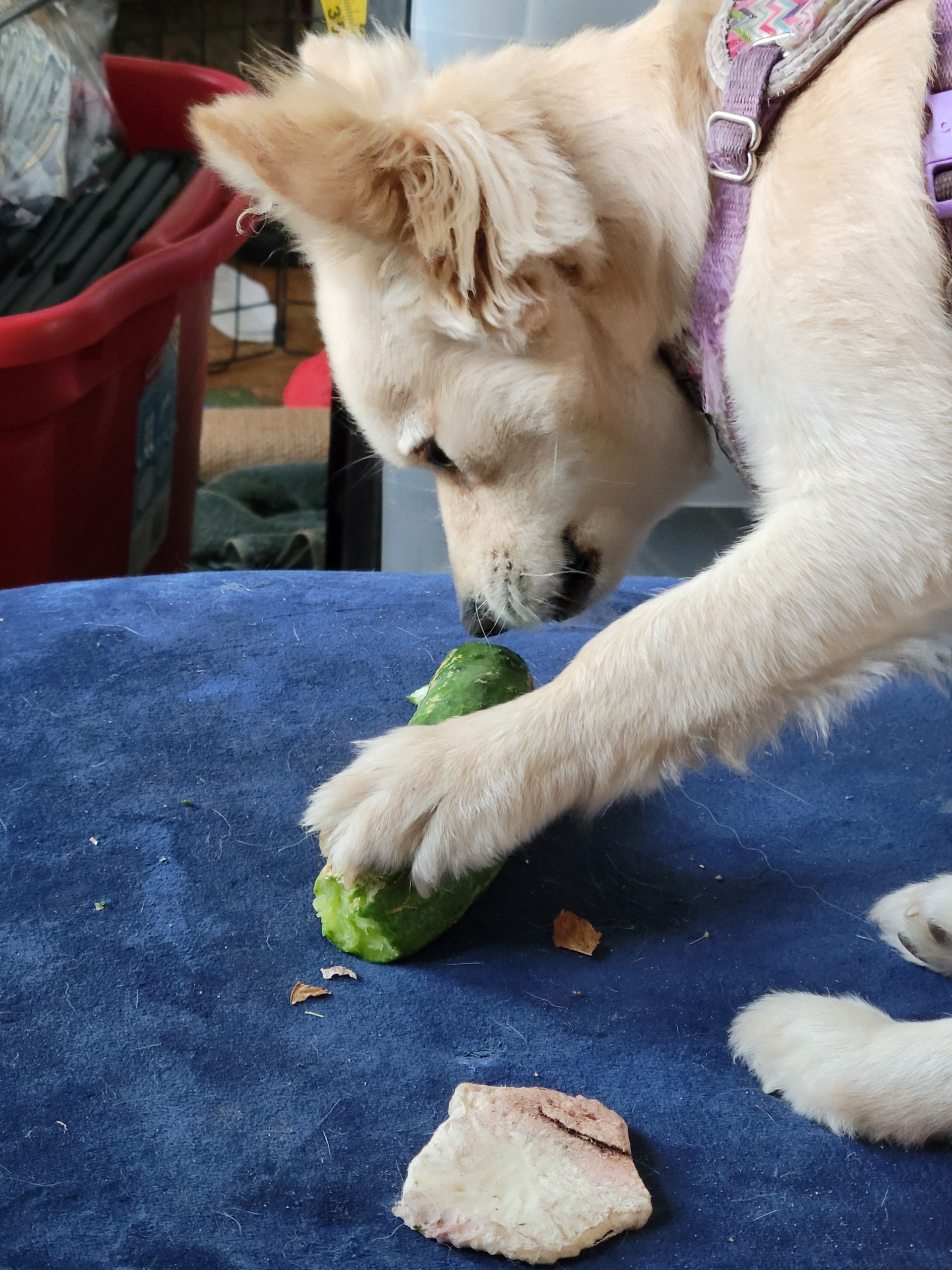
He also has opinions about cucumbers.
🌱 Where I get my seeds — MIgardener
I’ve been following MIgardener for years — they’re a family-run heirloom seed company with over 700 varieties, incredible germination rates, and some of the most genuinely helpful gardening content on YouTube. Everything I grow starts with their seeds, ordered directly from their website.
Their seeds aren’t on Amazon, so for seeds I always go straight to migardener.com. However, their beloved Trifecta+ fertilizer — an all-purpose organic blend with beneficial bacteria, fungi, and over 50 trace minerals — is available on Amazon and ships directly from MIgardener. It’s the only fertilizer I use and it’s genuinely worth it.
🥕 Carrots — The Crowd Favorite
1Easy to grow · Full sun · 70–80 days to harvest · 🟢 SNAP EBT eligible on Amazon
If you only grow one thing for your dogs, grow carrots. Both Boomer and Ollie go absolutely wild for them — and so does my grandson, which means carrot harvest day turns into a full negotiation. In addition to being crunchy and naturally sweet, raw carrots are good for dogs’ teeth, low in calories, and high in beta-carotene and fiber. As a bonus, they’re also one of the easiest things to grow in a Kansas garden.
I pull them straight from the ground, rinse them off, and hand them over. No prep required. The dogs don’t care about the tops — they want the carrot, and they want it immediately.
😂 The Great Carrot Heist
I was harvesting carrots one afternoon, pulling them and dropping them into the basket next to me. Ollie was “helping” — which mostly meant running around the garden being enthusiastic about everything. About halfway through the row I noticed my basket seemed lighter than it should be.
Ollie had been systematically removing carrots from my basket and building his own pile. By the time I finished harvesting, my basket was nearly empty and Ollie was sitting next to a very impressive collection of carrots, looking extremely pleased with himself. He had a whole system. I didn’t even see it happening.
I don’t know what he was planning to do with them. He ate about four and left the rest. The basket situation has not improved. 🥕
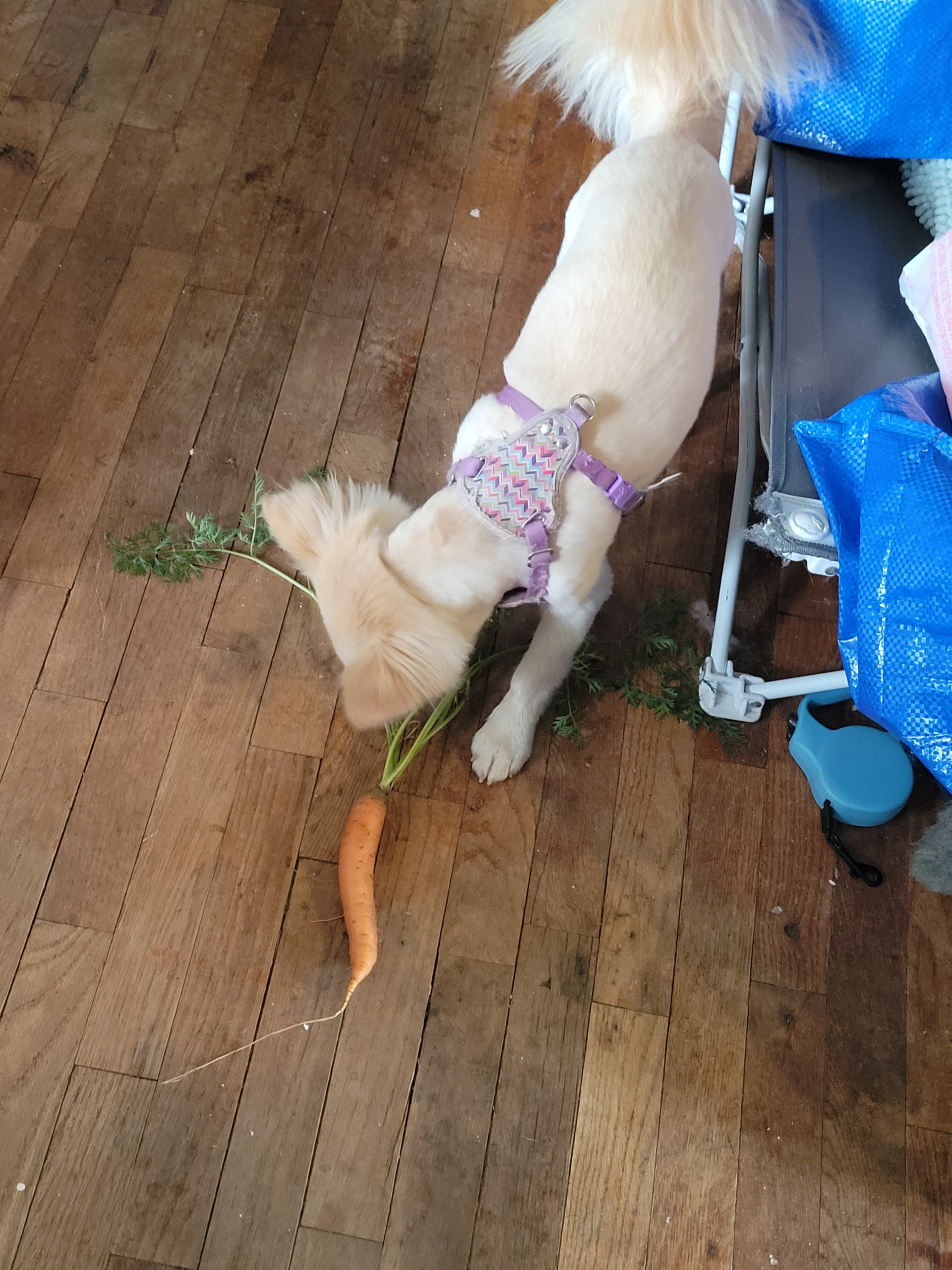
Ollie, extremely focused.
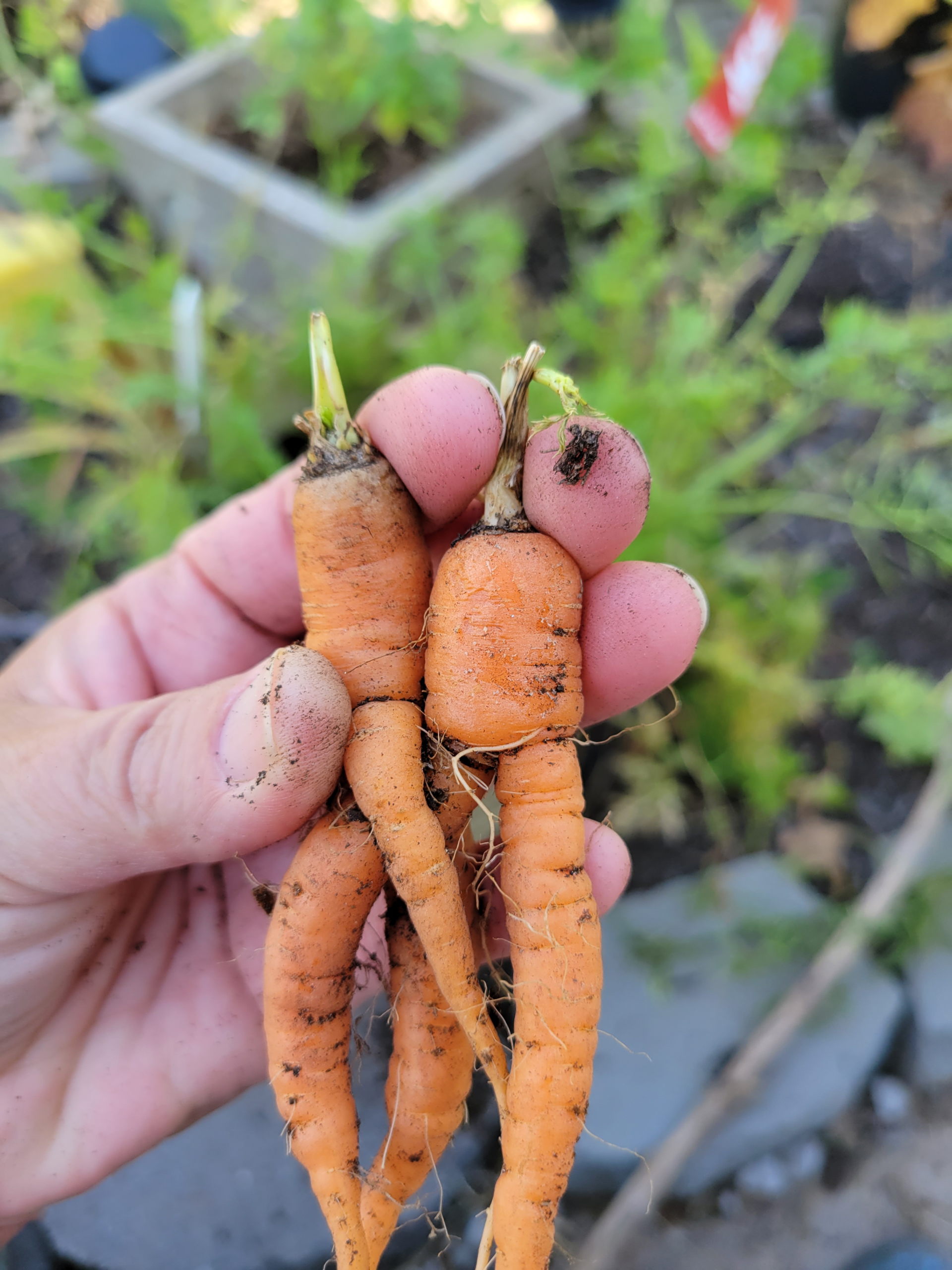
Fresh from the ground — these didn’t last long.
🍠 Sweet Potatoes — Worth the Wait
2Warm season · Full sun · 90–120 days · Plant slips not seeds
Sweet potatoes take longer than anything else in this post, but the payoff is worth it. Dogs love them roasted, steamed, or sliced raw — and they’re packed with vitamins A, B6, and C, plus fiber and potassium. Furthermore, they’re naturally anti-inflammatory, which is great for small breeds as they age.
Although raw sweet potato is safe for dogs in small amounts, I usually steam or roast ours since it’s easier to digest. The dogs know the difference between sweet potato harvest day and any other garden day — as a result, they station themselves at the garden gate and wait.
🫘 Green Beans — Low Calorie, High Reward
3Easy to grow · Full sun · 50–60 days · Bush or pole varieties · 🟢 SNAP EBT eligible on Amazon
Green beans are one of the best things you can give a small dog — low in calories, high in fiber, and most dogs genuinely love them, raw or lightly steamed. For instance, for a dog like Ollie who would eat everything in sight if allowed, green beans are a way to give him a satisfying snack without overdoing the calories.
In addition, they’re one of the most productive plants in the garden. One planting of bush beans gives you weeks of harvests. As a result, I snap them straight off the vine and hand them over — no cooking needed, no prep, just a fresh bean and a very happy dog.
🌿 Spinach — Ollie’s Personal Salad Bar
4Cool season · Full sun to part shade · 40–50 days · Plant early spring or fall · Also grows indoors in winter
I want to be upfront about something: Ollie has eaten my entire spinach section. Not a leaf here and there. The whole thing. And the most impressive part? He did it indoors, in the middle of winter, when I was growing it under a grow light to get a head start on the season. I came home to a very satisfied Dameranian and an empty tray.
Spinach is safe for dogs in moderate amounts — it’s rich in iron, vitamins A, B, C, and K, and antioxidants. The key word is moderate, since spinach does contain oxalic acid which can interfere with calcium absorption in very large amounts. But a few leaves from the garden? Completely fine. Ollie’s enthusiasm for it is something to witness, indoors or out.
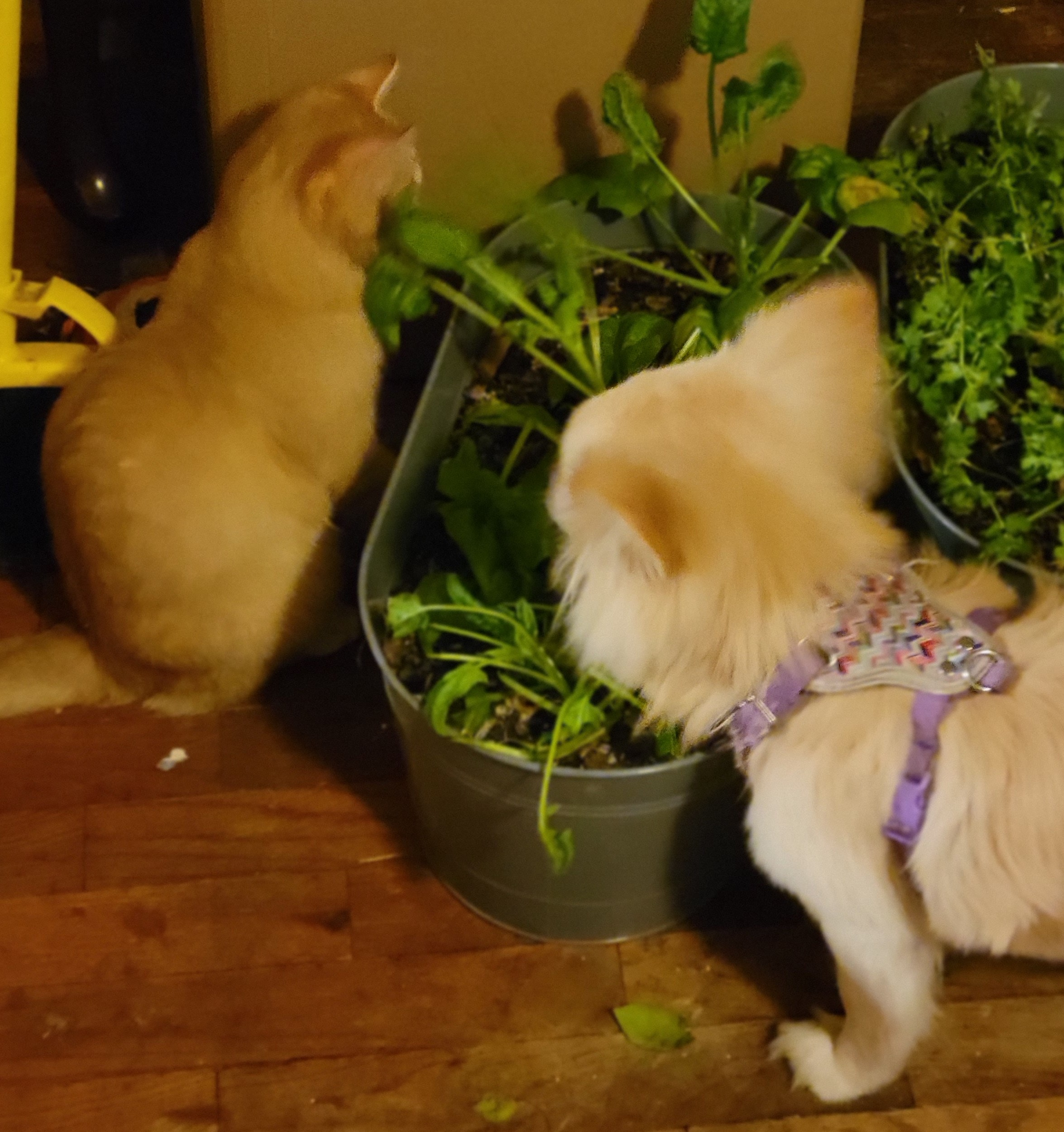
The indoor spinach. Ollie had help. The cat was also involved. The spinach did not survive. 😂
🍉 Watermelon — Straight Off the Vine
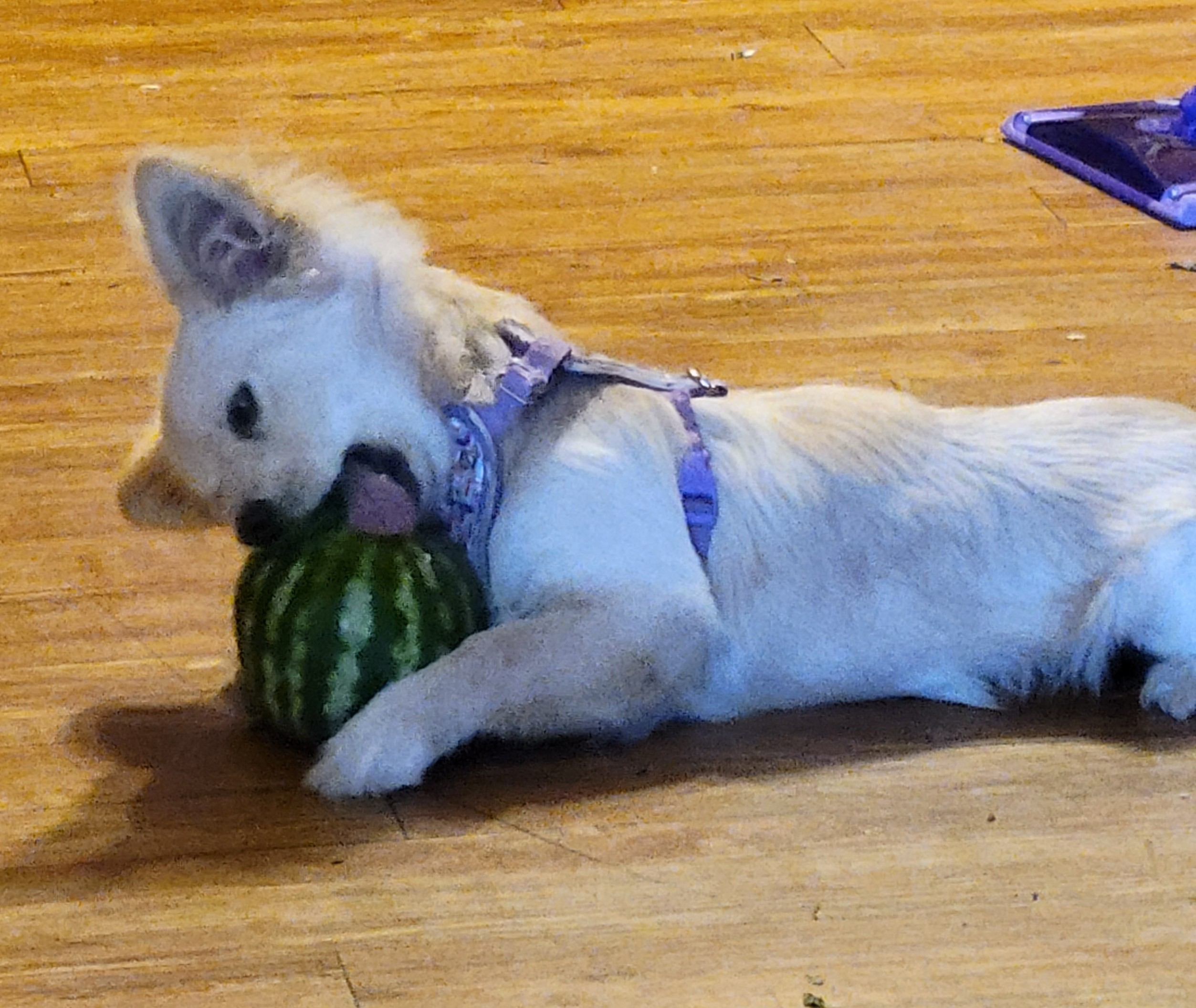
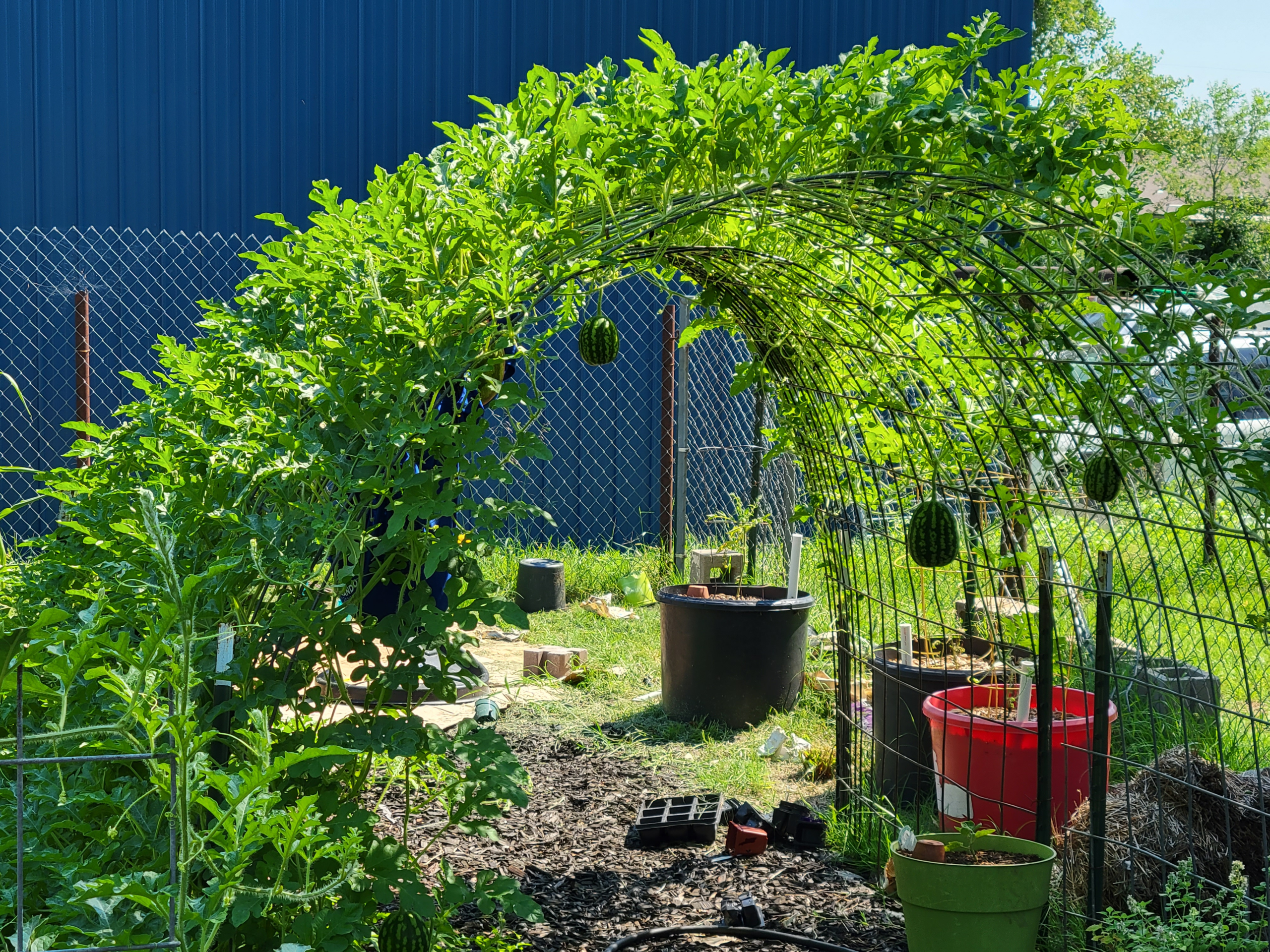
5Warm season · Full sun · Lots of space · 70–90 days · Crimson Sweet variety in photos · 🟢 SNAP EBT eligible on Amazon
Ollie discovered watermelon on the vine by accident one summer and has never recovered from the experience. He will patrol the watermelon patch daily once they start coming in, checking each one with his nose like he’s doing quality control. He’s not wrong — fresh watermelon right off the vine on a hot Kansas afternoon is genuinely incredible, and dogs love it just as much as people do.
The variety in our photos is Crimson Sweet — a classic heirloom variety with deep red flesh, high sugar content, and excellent flavor. It’s the one I’ve been growing for years and the one Ollie has very strong feelings about. Watermelon is 92% water, which makes it one of the best summer treats for keeping dogs hydrated on hot days. Remove the seeds and rind before giving it to your dogs — the flesh is what they want and what’s safe.
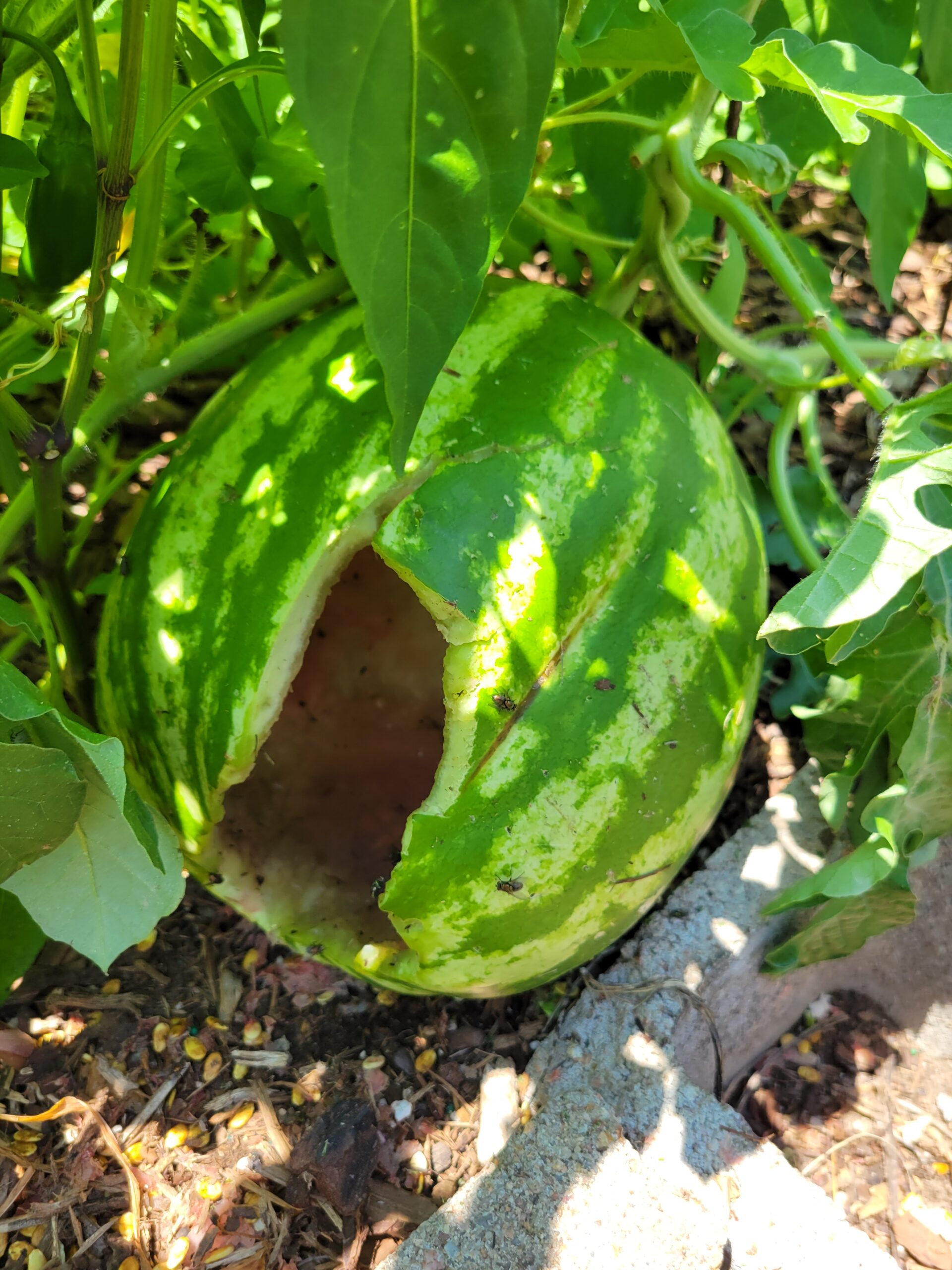
Straight off the vine. Ollie found this one first.
His first watermelon. He was committed.
🫐 Blueberries — The Superfood Bush
6Perennial · Full sun · Plant once, harvest for years · Acidic soil needed
Blueberries are one of the best things you can give a dog — antioxidant-rich, anti-inflammatory, great for brain health and immune support. They’re also bite-sized for small dogs, which makes them the perfect treat to toss and let the dogs catch. Boomer especially loves playing catch-the-blueberry.
The best part about growing blueberries is that once they’re established, they come back every year with almost no effort. They do need acidic soil — amend with peat moss or sulfur if needed — and they produce more with two different varieties planted nearby for cross-pollination.
🌿 Flat-Leaf Italian Parsley — Natural Breath Freshener
7Easy to grow · Full sun to part shade · Annual · Grow near the kitchen
Parsley is one of the most useful herbs you can grow for dogs — it’s a natural breath freshener, contains antioxidants, and supports kidney function. A few sprigs mixed into food or offered as a fresh nibble makes a real difference for dogs with persistent bad breath.
🌱 Rosemary — The Perennial Worth Having
8Perennial (zones 7+) · Full sun · Drought tolerant · Plant once
Rosemary is safe for dogs in small amounts and has antioxidant and antimicrobial properties. More practically, it’s one of the easiest herbs to grow on a small Kansas homestead — drought tolerant once established, comes back every year in our zone, and smells incredible. A little fresh rosemary added to homemade treats is a nice touch.
Dogs don’t tend to go for rosemary on their own — it’s more of a “add it to the baked treats” herb than a “hand it to the dog straight” herb. But having it growing means you always have it on hand.
🥜 Peanuts — Ollie’s Greatest Love and Greatest Limitation
9Warm season · Full sun · Sandy, loose soil · 120–150 days
Ollie dances for peanuts. I mean this literally — there is a specific dance that happens the moment he suspects a peanut is nearby, and it involves his whole back half. It is one of the best things I have ever seen.
Raw peanuts (unsalted, unflavored, no shell) are safe for dogs — but they are very high in fat, which means small dogs need strict limits. Ollie gets just one or two at a time as a special treat. Too many can lead to pancreatitis, especially in small breeds. So we grow them, he loses his mind over them, and we dole them out very carefully.
MIgardener carries peanut seeds — growing your own means you know exactly what’s in them and can control the quantity perfectly.
🚫 Plants to avoid in a garden where dogs graze
If your dogs have free access to your garden the way mine do, avoid planting these — or fence them off completely:
- Onions & garlic — toxic to dogs, damage red blood cells
- Grapes & raisins — can cause kidney failure even in small amounts
- Tomato plants — the green parts (leaves, stems, unripe fruit) are toxic; ripe red tomatoes are okay in small amounts
- Rhubarb — leaves are toxic to dogs
- Wild mushrooms — if any grow in your yard, remove them immediately
- Chives & leeks — same family as onions, same toxicity risk
- Spring parsley (wild parsley) — toxic, as noted above
- Avocado — toxic to dogs
🌱 The real reason I garden now
I’ll be honest — this past winter wore me out. There were stretches where I didn’t have the energy for much, and the garden was one of the things that fell by the wayside in my mind.
But writing this post reminded me why I love it. Not just for the vegetables. For the way Ollie patrols the rows like he’s the head of security. For the way Boomer gets excited about carrots with the same energy he brings to absolutely everything. For the way my grandson negotiates over a sweet potato with two small dogs like it’s the most serious business in the world.
The garden isn’t just food. On a small homestead, with dogs and grandkids and a life built around growing things — it’s one of the best parts of the year. I’m planting for all of us this summer. 🐾
💬 What does your dog steal from the garden?
Ollie has eaten my spinach twice and shows zero remorse. Boomer once carried a carrot around for 20 minutes before eating it, like he was saving it for later. What’s the most ridiculous thing your dog has taken from the garden? Drop it in the comments — I need to know I’m not alone. 🐾
❄️ Can’t wait until spring? Grow indoors this winter
Spinach, microgreens, herbs, and more can all be grown indoors under a grow light during the winter months — which means your dogs don’t have to wait for spring to raid the garden. A future post is coming all about indoor winter crops for your pups. Just maybe keep the grow light shelf somewhere Ollie can’t reach it.
→ Coming soon: Indoor Winter Crops for Your Dogs🍪 Turn your garden harvest into homemade dog treats
Once you’ve got carrots, sweet potatoes, blueberries, and parsley growing — put them to work. A future post is coming all about homemade baked dog treats using garden ingredients — kid-friendly, simple recipes that Boomer and Ollie will approve.
→ Coming soon: Homemade Dog Treats You Can Bake with the KidsA dog-friendly garden doesn’t require a lot of extra planning — most of what dogs love to eat is the same stuff we already grow. A few extra rows of carrots, a blueberry bush in the corner, some parsley by the back door. Small additions that make the whole garden more alive. And if you’re thinking about what else to feed your pups beyond garden snacks, here’s what I actually feed Boomer and Ollie.
What are you planting this summer? 🐾