
BACKYARD HOMESTEAD ✦ GARDEN & WILDLIFE
10 Things to Start a
Butterfly Garden This Spring
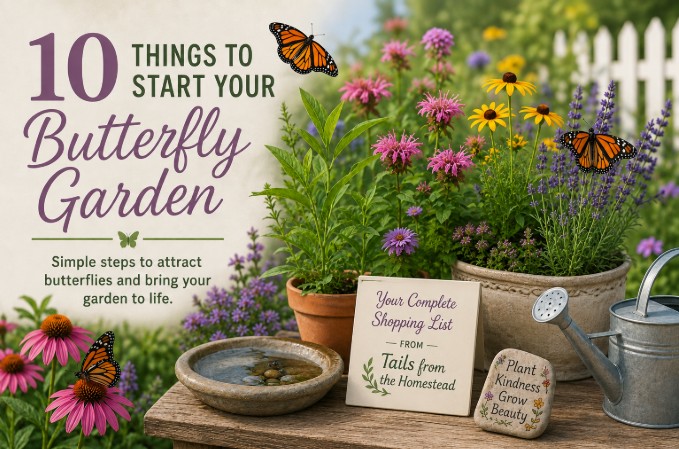
Plants, feeders, puddling stones, and a few things I never knew butterflies needed — your complete butterfly garden starter kit.
I’ve been putting together a butterfly garden starter kit for our farm this spring, and what I found when I actually started researching surprised me. I’d been watching the same corner of our property sit empty for two years — a patch of grass the goats ignore and the dogs walk past without a second glance. This spring it’s finally becoming something.
I figured it would be simple: plant some flowers, hang a butterfly house, done. What I found when I actually started researching was a lot more interesting than that. Butterflies have specific needs — for nectar, for water minerals, for host plants to lay their eggs on — and most gardens only get half of it right. This list covers the whole picture, from the plants to the accessories that actually make butterflies stick around.
Everything here can be ordered on Amazon or found at a local garden center. I’m building this butterfly garden from scratch this spring, and I’m taking you along for the whole thing.
Your Butterfly Garden Starter Kit: What You Actually Need
Here’s what most people miss: butterflies need two kinds of plants — nectar plants to feed from, and host plants to lay their eggs on. If you only plant nectar flowers, butterflies will visit but never stay. Host plants are what turn a pretty garden into a real butterfly habitat.
🦋 Milkweed Seeds or Plants
1Search: “milkweed seeds native” or “asclepias tuberosa butterfly weed”
If you do nothing else on this list, plant milkweed. Monarch butterflies can only lay their eggs on milkweed — it’s the only plant their caterpillars can eat. With monarch populations declining sharply, adding milkweed to your yard is one of the most meaningful things a home gardener can do. Butterfly Weed (Asclepias tuberosa) is the most garden-friendly variety — it’s native to the central US, drought-tolerant, and produces gorgeous orange blooms. Start with seeds in spring or buy established plants if you want blooms the first year.
🌿 Parsley Seeds
2Search: “parsley seeds herb garden”
Milkweed gets all the press, but if you want swallowtail butterflies — the big, dramatic black and yellow ones — you need herbs in the carrot family. Black Swallowtails lay their eggs exclusively on parsley, dill, fennel, and Queen Anne’s Lace. Plant a dedicated patch just for the butterflies and plan to lose it entirely to caterpillars. That’s a win.
🌿 Dill Seeds
3Search: “dill seeds herb garden”
Dill is the other essential Black Swallowtail host plant — and it’s one of the easiest herbs to grow from seed. Direct sow in early spring, thin to 12 inches apart, and let it do its thing. A patch of dill that goes to flower is more valuable to butterflies than a perfectly manicured herb garden. Let some of it bolt — the flat flower heads attract both adult butterflies and beneficial insects.
🌿 Fennel Seeds
4Search: “fennel seeds herb garden”
Bronze fennel is the most ornamental of the swallowtail host plants — its feathery copper foliage looks beautiful even before the butterflies arrive. It’s also perennial in our zone, which means it comes back every year and gets larger each season. One well-established fennel plant can support dozens of Black Swallowtail caterpillars over a summer. Plant it at the back of a border where its height (4–5 feet) works as a backdrop.
Once you have host plants to bring butterflies in, nectar plants are what keeps them visiting all season long. The key is bloom succession — having something flowering from early spring through fall so there’s always a reason to stay.
💜 Butterfly Bush Seeds or Plants
5Search: “buddleia davidii butterfly bush seeds plant”
The name isn’t a coincidence — Butterfly Bush is one of the highest-traffic nectar plants you can grow. On a good summer day you can count dozens of butterflies on a single mature bush. It blooms in long, fragrant wands of purple, pink, or white from midsummer through frost. Plant it alongside your native host plants rather than instead of them, and deadhead regularly to reduce self-seeding. In Kansas and Oklahoma it’s not on the invasive species list.
🌻 Native Wildflower Seed Mix
6Search: “native wildflower seed mix pollinator” or “prairie wildflower mix”
A native wildflower seed mix is the highest-ROI thing you can plant for pollinators per dollar spent. Native flowers like coneflowers, black-eyed Susans, goldenrod, and native asters bloom in succession and support both adult butterflies and their caterpillars. Look for a mix specifically labeled for the central US or Great Plains region. Scatter seed in a prepared bed in early spring and let it naturalize — by year two a well-planted native patch essentially takes care of itself.
Butterflies don’t drink from birdbaths — they “puddle,” gathering minerals and salts from damp soil or shallow water. A garden without a puddling source is like a restaurant with no drinks menu.
🪨 A Butterfly Puddling Stone
7Search: “butterfly puddling stone ceramic garden”
Butterflies gather around mud puddles to drink the minerals and salts they can’t get from nectar. A puddling stone is a shallow ceramic dish designed to mimic that mud puddle in a garden-friendly way. Fill it with sand, add a small pinch of salt, and keep it moist. Place it in a sunny spot among your flowers where butterflies can feed and sunbathe. Once they know where it is, they’ll come back regularly.
🍊 An Overripe Fruit Feeder
8Search: “butterfly feeder fruit hanging garden”
Some butterflies — especially Red Admirals, Question Marks, and Painted Ladies — are as attracted to fermenting fruit as they are to flowers. A hanging fruit feeder filled with overripe banana, orange slices, or watermelon rind can draw in species that don’t heavily visit nectar plants. This is a fun one to set up near a window so you can watch.
🦋 A Wooden Butterfly House
9Search: “wooden butterfly house garden rustic”
I’ll be honest: the research on butterfly houses is mixed. Butterflies don’t use them the way birds use birdhouses. That said, a well-placed butterfly house can provide shelter from rain and wind, and some species do use them. The main value is that they’re beautiful, they signal what kind of garden this is, and they make you feel good about what you’ve built — which is a perfectly valid reason to buy something. Look for one with narrow vertical slots and hang it in a sheltered, partially sunny spot near your nectar plants.
🐛 A Butterfly Habitat Cage (For Raising)
10Search: “monarch butterfly habitat cage mesh 30 inch”
This one is optional but genuinely magical, especially if you have grandkids around. A pop-up mesh habitat cage lets you bring caterpillars indoors, watch them form chrysalises, and release the butterflies when they emerge. Monarch caterpillars are easy to raise — feed them fresh milkweed, keep the cage clean, and watch the whole transformation happen over about two weeks.
📚 A Field Guide to Butterflies
11Search: “Kaufman field guide butterflies North America”
Once your garden starts attracting visitors, you’ll want to know who’s showing up. A good regional field guide pays off every single time you use it — and you’ll use it more than you expect. The Kaufman Field Guide to Butterflies of North America is the most recommended for our region: clear photos, organized by family, and compact enough to keep on a porch table.
🌱 A Garden Kneeler & Trowel Set
12Search: “garden kneeler seat foldable stainless trowel set”
Practical, unsexy, and completely necessary. If you’re planting a new garden bed from scratch, your knees will thank you for a proper kneeler. The folding garden kneeler that converts to a seat is the one I keep seeing recommended by gardeners who’ve been doing this for decades. Pair it with a good stainless steel trowel set and you have everything you need to get the garden in the ground this weekend.
🌾 A Note on Pesticides
This one isn’t negotiable: if you want butterflies, you cannot use broad-spectrum pesticides in or near your butterfly garden. Caterpillars are insects — they will be killed along with the pests you’re targeting. That includes Bt (Bacillus thuringiensis), which is often marketed as “organic” but is deadly to monarch caterpillars. Spot-treat problem areas away from your butterfly patch and let the garden do what it’s designed to do.
💬 What butterflies do you see on your property?
We’re just getting started on our butterfly garden over here on the farm, but I’d love to know what you’re already seeing in your yard. Are you in monarch territory? Do you get swallowtails? Drop it in the comments — I’m keeping a list of what to expect this summer. 🦋
If you’re also dreaming about backyard chickens this spring, I put together a complete backyard chickens starter kit shopping list with everything you need before your chicks arrive.
A butterfly garden isn’t a weekend project — it’s a multi-season investment that gets better every year as your plants mature and more butterflies learn where to find you. But you have to start somewhere, and spring is exactly the right time.
I’ll be sharing updates as our little corner of the farm transforms this season. 🌱
— Caryn